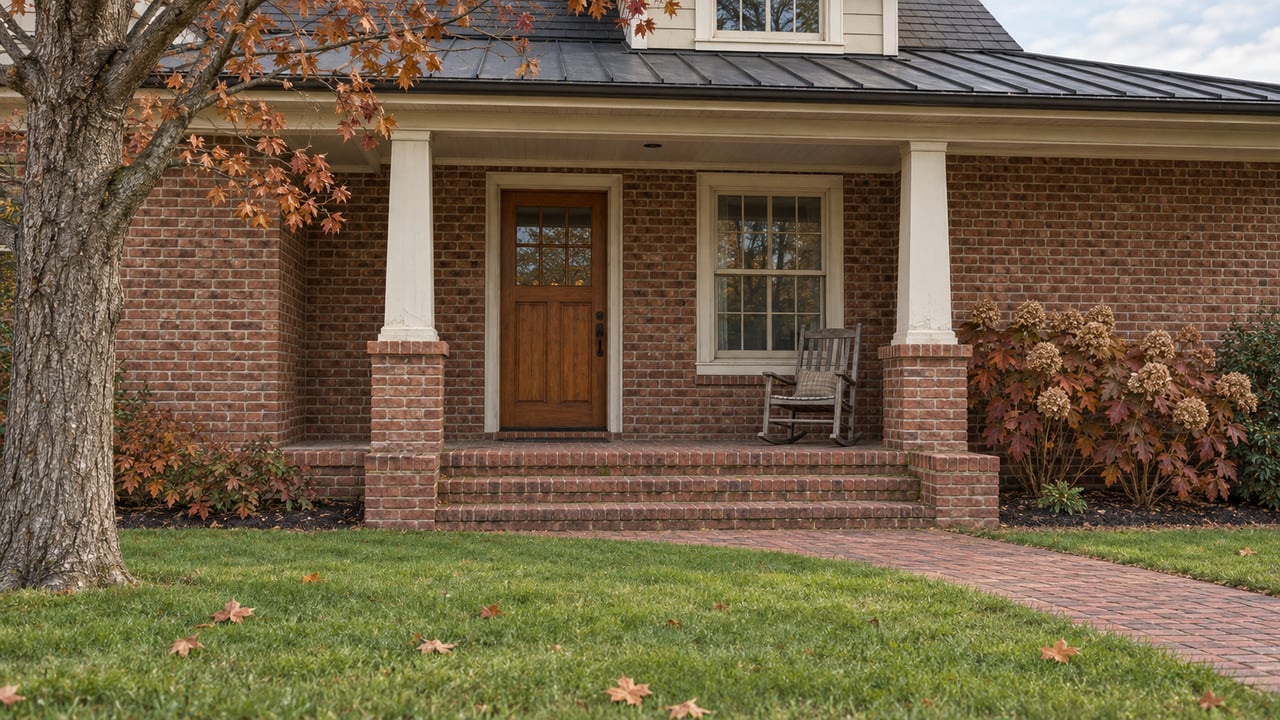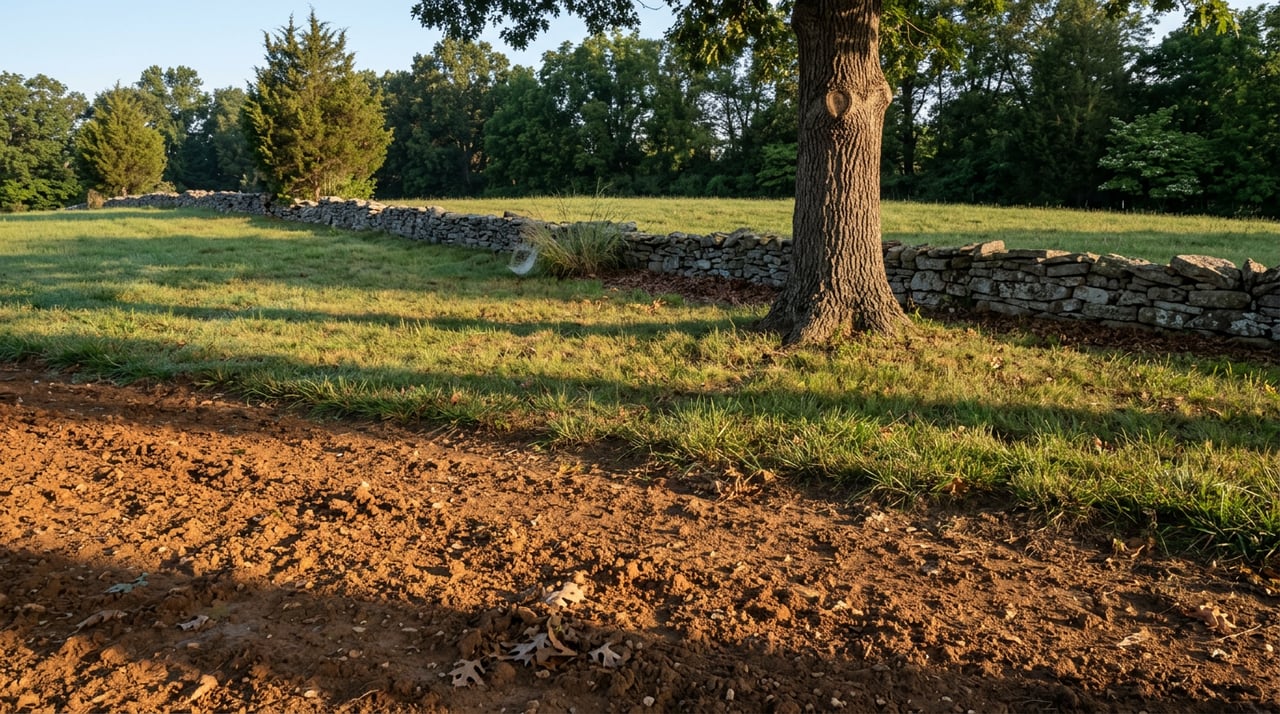
A listing came across the Leiper's Fork market not long ago advertising 9.65 flat, usable acres with power and water already on site and a barndominium roughly 90 percent finished.
The acreage total on a listing tells you almost nothing about what you can actually put on the ground. What tells you is a soil evaluation filed with a county office in downtown Franklin. The Williamson County Subsurface Sewage Disposal Systems Task Force meeting notes show the county was reviewing its regulations this year.
Why Acreage Is the Wrong First Question
According to the Williamson County Department of Sewage Disposal Management, no part of Leiper's Fork village or the surrounding countryside sits on a municipal sewer line; every home, from a weekend cabin to a six-thousand-square-foot entertaining estate, runs on a private septic system under county jurisdiction.
That single fact reorders the whole due-diligence process. The question worth asking about a 15-acre tract on Old Hillsboro Road or a 40-acre parcel along the Leiper's Creek corridor is not how many acres it has. It's how much of that acreage can legally carry a septic field, at what bedroom count. Sellers of the best parcels already know this, which is why the strongest listings lead with phrases like "perc approved" or "5-bedroom soil site" rather than leading with the acreage figure alone.
What a Percolation Test Actually Measures
The soil evaluation, commonly called a perc test, is performed by a soil consultant working a grid across the property. TNLDS says test holes are spaced no more than 50 feet apart, with each hole treated as representative of a 2,500-square-foot block of ground around it. Soil that drains fast enough qualifies for a standard system. Soil that drains too slowly needs a different, often more expensive, system design or fails outright for septic use.
Here is the part that changes how you should read a listing: if a hole fails, that block of land is done for septic purposes, permanently. So a description like "23 acres, mostly wooded, minutes from the lake" can hide a much smaller usable footprint once you subtract creek banks, steep hollows, and whatever section of clay failed its test years ago and was never mentioned again.
Available Space on the Parcel
Passing the test on your primary field isn't the finish line. On a rolling 8 or 10-acre tract split by a creek, available space can be the difference between fitting a house and a barn or fitting the house alone.
Setbacks narrow the map further. According to Septic Superior, the county's current table keeps a septic area at least 50 feet from any well or spring, 25 feet from the house itself, sinkholes, stream banks, pools, and the road right-of-way, and 20 feet off every property line. Add a bedroom later, or grow the house by more than half its existing square footage, and the system has to be re-approved for the new load. None of this shows up in an acreage number. All of it shows up on the soil map.
| Feature near the septic field | Minimum required distance |
|---|---|
| Well or spring | 50 feet |
| House, sinkholes, stream banks, pools, road right-of-way | 25 feet |
| Property line | 20 feet |
A County That Signs Its Own Permits
Williamson is one of only nine counties that runs its own program through the Department of Sewage Disposal Management at 1320 West Main Street in Franklin, rather than through the state portal. It's a small distinction that trips up a surprising number of buyers, because generic advice about septic permitting in Tennessee almost always points to the state process, and that guidance is simply the wrong office for a Williamson County address.
The Rulebook Is Being Rewritten This Year
The extra layer of county-specific rules has been a source of friction for a long time, and it came to a head in late 2025. County Commissioner Brian Clifford told fellow commissioners the county's septic compliance requirements add real cost on top of installation compared with neighboring counties, and the commission responded by creating a Subsurface Sewage Disposal Systems Task Force to study the state's rules against Williamson's own and recommend what, if anything, the county should keep beyond what the state already requires.
That task force isn't a hypothetical committee somewhere in the future. It has already met multiple times in early 2026, including sessions on January 23 and February 19, working section by section through the county's regulations. According to the Williamson County public notice, its final report was due April 1, 2026, with presentation to the full County Commission scheduled for the May 2026 meeting. The county's own public notice tells anyone with a septic application already in process to think carefully about whether to move forward under the current rules or wait for whatever the task force's recommendations become once adopted.
For anyone timing a land purchase around a specific building season, that's a live variable worth a phone call before it's a surprise on a closing statement.
What This Means If You're Evaluating a Parcel Right Now
A few habits separate buyers who get through this cleanly from buyers who find out too late.
- Ask for the actual soil map and perc test report on file with the county, not a verbal assurance that "the land will perk."
- Ask for the status and documentation of any existing approval.
- Check how much usable space is on the specific parcel you're buying, not just the acreage total.
- If your closing or build timeline stretches further into 2026, ask whether the county has adopted any of the task force's recommendations since the parcel was last evaluated, since the setback table or bedroom rules attached to your soil site could shift.
- Bring in a Tennessee-licensed soil consultant before you write an offer that treats "buildable" as a settled fact rather than a question with a paper trail.
Frequently Asked Questions
Can I skip the percolation test if a home already exists on the property? Not automatically. Adding bedrooms or expanding the house by more than half its existing square footage requires the system to be re-approved for the new load.
Is this a bad time to buy raw land in Leiper's Fork given the ongoing rule review? Not necessarily. The task force is examining whether to ease certain requirements, and the county's own guidance tells applicants they can choose to proceed under today's rules or wait for the new ones once adopted. That's a timing question worth working through with someone who knows the local process, not a reason to sit out the market altogether.
Land in Leiper's Fork rewards buyers who read past the acreage line. Leipers Fork Living works this ground regularly, from soil consultants who know the difference between a passing test and a workaround, to sellers who can tell you honestly what a parcel's reserve field actually covers before you're under contract. Explore Leiper's Fork listings and request a private tour to walk a property with someone who reads the soil map first and the acreage number second.
This article is general information, not legal, tax or financial advice. Consult a qualified professional about your situation.